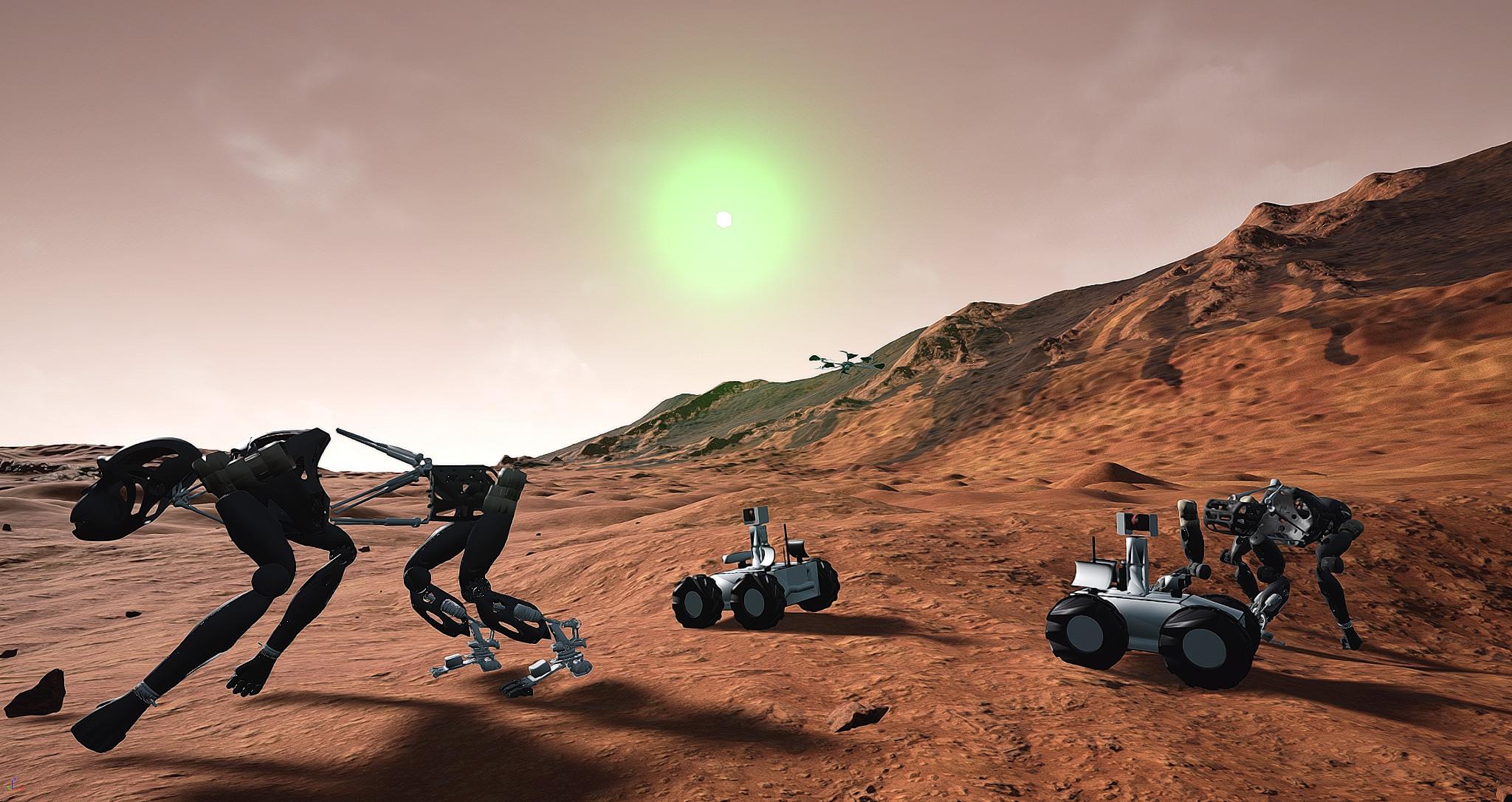
Deep Dive into the Martian Canyon: VaMEx Featured on the “Auf Distanz” Podcast

The latest episode of the renowned space exploration podcast Auf Distanz offers a front-row seat to the future of Mars exploration. In a comprehensive feature spanning over 80 minutes, host Lars Naber explores the technical heart of the VaMEx initiative and the results of our recent field campaigns.

While mainstream media often focuses on the “cool factor” of robots in a quarry, Episode 0133: Valles Marineris Explorer (VaMEx) and the DLR Explorer Initiatives goes much deeper. Lars Naber joined our team during our intensive field tests in Middle Franconia to capture the atmosphere, the sound of the rotors, and the complex engineering challenges that come with simulating a mission to the Red Planet.

Exploring the “Swarm Symphony”

The episode centers on the core objective of the VaMEx-3 phase: the seamless coordination of a heterogeneous swarm. This “symphony” of autonomous rovers and multicopters must navigate, map, and communicate in extreme environments—all without the help of GPS or constant human intervention.

The podcast features in-depth interviews with key figures of the mission:

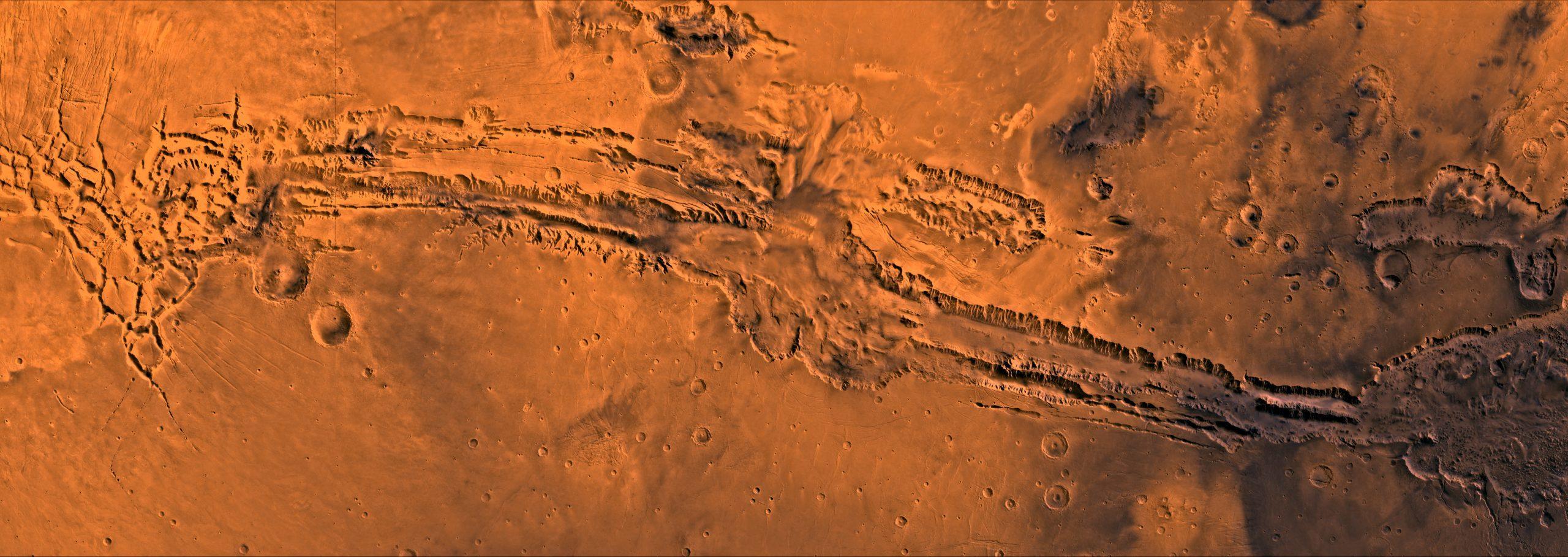
  • Dr. Oliver Funke (German Space Agency at DLR) discusses the strategic importance of the Explorer initiatives and why Valles Marineris—the largest canyon in the solar system—is a prime target for discovering water and potential signs of life.
  • Researchers from the University of Würzburg and other partner institutions explain the “brains” behind the robots, detailing how they handle autonomous decision-making when direct communication with Earth is cut off by towering canyon walls.

Highlights of the Episode

Listeners can expect a detailed breakdown of several critical mission components:

  • Autonomous Navigation: How SLAM (Simultaneous Localization and Mapping) and LiDAR sensors allow the robots to “see” and understand unknown terrain.
  • The Power of the Swarm: Why a group of specialized, lower-cost robots is more resilient and effective than a single, traditional rover.
  • From Lab to Field: The reality of “Analog Astronautics”—dealing with dust, hardware glitches, and the unpredictable nature of real-world testing.

Listen Now

For project partners, space enthusiasts, and anyone interested in the cutting edge of robotics, this episode provides the most detailed audio documentation of the VaMEx-3 project to date. It is a testament to the collaborative effort driving Germany’s contributions to planetary exploration.

Listen to the full episode here: Auf Distanz 0133 – VaMEx und die DLR Explorer-Initiativen

We would like to thank Lars Naber for visiting us in the field and for producing such an insightful feature on our work at the frontier of autonomous robotics!

From Middle Franconia to the Red Planet: VaMEx Swarm Success Sparks Media Buzz

The rugged terrain of a quarry in Middle Franconia recently served as the ultimate proving ground for the future of Mars exploration. The VaMEx-3 field test has successfully demonstrated how a heterogeneous swarm of robots can navigate, map, and explore extreme environments autonomously—performance that has captured the attention of major national media outlets.

For several days, the quiet town of Langenaltheim was transformed into a simulation of Valles Marineris, the grand canyon of Mars. The VaMEx (Valles Marineris Explorer) initiative brought together its latest generation of hardware and software to prove that the mission’s “swarm intelligence” concept isn’t just theoretical—it’s ready for the dirt.

Collaborative Exploration in Action

The core of the VaMEx mission is collaboration. During the field test, ground-based rovers and aerial multicopters worked in tandem. While the flying units provided high-resolution aerial perspectives and mapping data, the ground rovers navigated the complex, rocky floor of the quarry.

This “heterogeneous swarm” approach allows the robots to compensate for each other’s limitations: the drones scout ahead to identify safe paths, while the rovers carry the heavy scientific payloads required to search for signs of water or life. All of this happened with a high degree of autonomy, simulating the communication delays and environmental challenges of a real Mars mission.

In the Spotlight: From Bild to BR

The technical success of the maneuvers was matched by an extraordinary wave of public interest. High-profile media outlets visited the site to witness the future of space robotics firsthand:

What’s Next for VaMEx?

The data gathered during the Langenaltheim field test is currently being analyzed by our partner institutions. The successful synchronization of navigation, communication, and environmental mapping represents a major milestone for the VaMEx-3 project phase.

As we move forward, the lessons learned in the dust of the quarry will be integrated into our flight-ready algorithms. The media attention serves as a powerful reminder of the public’s fascination with Mars—and the vital role that autonomous robotics will play in getting us there.

Stay tuned to vamex.space for further updates, technical deep-dives, and behind-the-scenes footage from the field!

University of Bremen Displays Recent Efforts in both Moon & Mars Exploration

The University of Bremen and its partners are advancing new research for the exploration of both the Moon and Mars, as highlighted in a recent Handelskammer article. In both domains, teams are developing efficient and reliable methods for deploying autonomous robots under the harsh environmental conditions of extraterrestrial bodies.

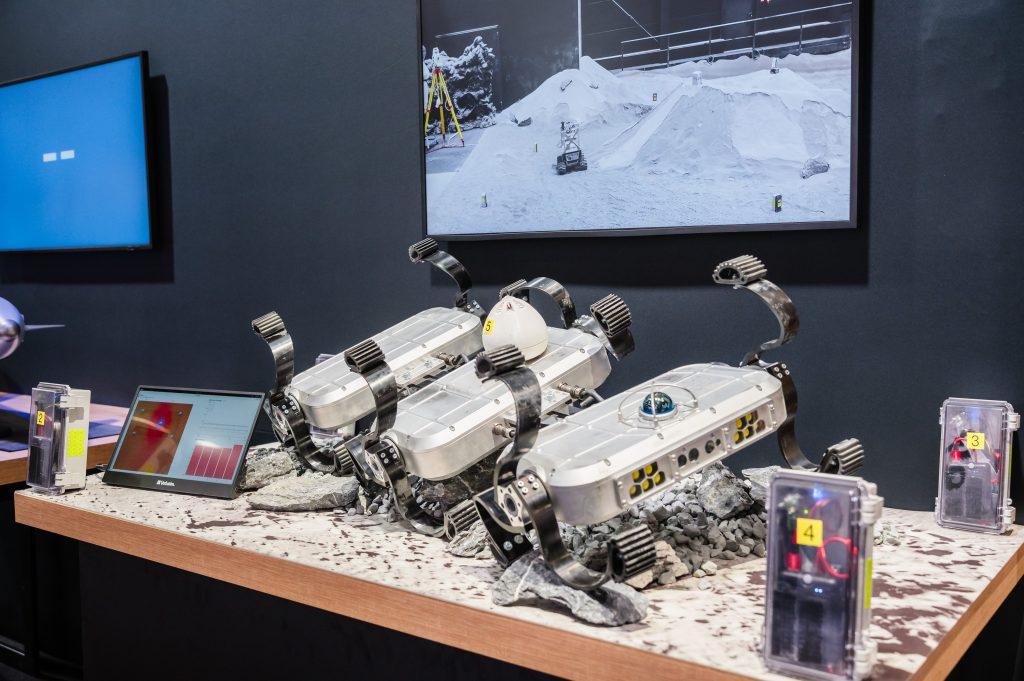
In collaboration with the DLR and DFKI, researchers from the University of Bremen contributed to a regolith-processing robotic system that Team Bremen successfully demonstrated during the ESA Space Resources Challenge. Their approach illustrates how the autonomous robots could gather and sort lunar soil to support resource extraction essential for sustainable lunar exploration.

For Mars exploration, the VaMEx-3 consortium — comprising its broad network of partners — recently validated the capabilities and interaction of its systems in a stone pit selected for its similarity to Martian terrain. The large-scale experiment brought together 14 robots operating across the physical test site and its virtual Mars twin, showcasing the impressive coordination required for future missions.

Showcasing the Progress of the VaMEx-3 MarsSymphony at the 2025 International Astronautical Congress (IAC) in Sydney

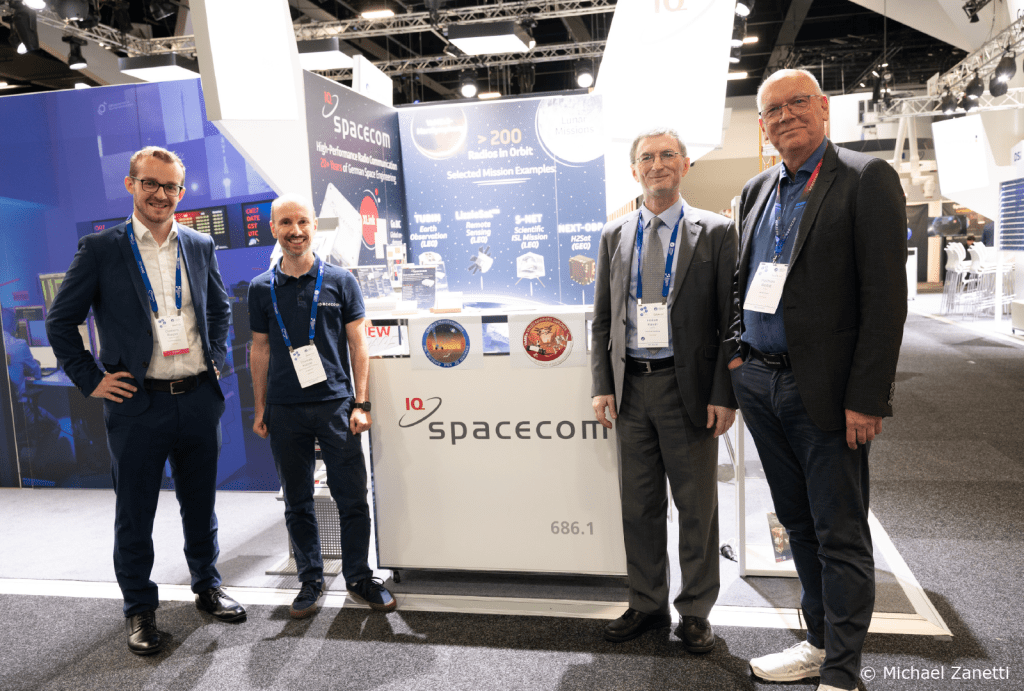
The VaMEx3-MarsSymphony team at the IAC included: Clemens Riegler (JMU), Dr.-Ing. Thomas Kühne (IQ spacecom), Prof. Dr.-Ing. Hakan Kayal (JMU), and Mathias Reibe (IQ spacecom).

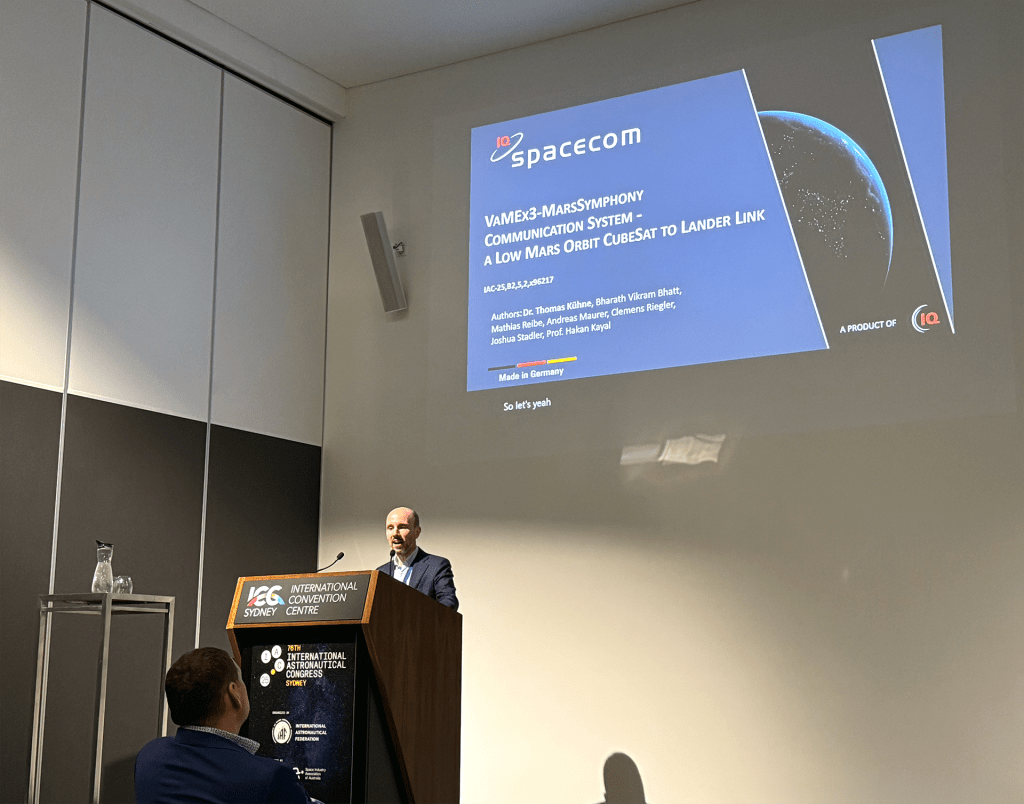
The VaMEx-3 MarsSymphony research project was well represented at the 2025 International Astronautical Congress (IAC) in Sydney, with contributions from several partners. During the technical sessions, multiple team members presented various aspects of the project. Dr.-Ing. Thomas Kühne from IQ spacecom presented his paper, “VaMEx-3 Mars Symphony Communication System: A Low Mars Orbit CubeSat to Lander Link,” which outlined the Mars Symphony communication concept that enables reliable data transmission between an orbiter and a lander on Mars. Prof. Dr.-Ing. Hakan Kayal from Julius-Maximilians-Universität Würzburg presented “Exploring Transient Phenomena in the Martian Atmosphere,” introducing the SkyCam sky observation system and presenting expected phenomena in the Martian atmosphere. Clemens Riegler, also from the Julius-Maximilians-Universität Würzburg, presented the paper “Towards Autorotation Landers for Communication and Sensor Networks on Mars,” describing a novel autorotation flight system for Martian landers.

At the IAC exhibition, IQ spacecom discussed the progress of the VaMEx-3 MarsSymphony communication solution with visitors at the company’s booth in the German Pavilion by BDLI. With the DLR’s Scout Rover on display nearby, the VaMEx-3 project was represented across multiple facets of the mission, including robotics and communications.

The IAC 2025 provided a splendid opportunity for the entire IQ spacecom (IQ Technologies for Earth and Space GmbH) and Julius Maximilian University Würzburg (JMU) team to present the VaMEx-3 MarsSymphony project and discuss its progress together.

Novel VaMEx Experience at the DLR School Lab

We are excited to unveil our innovative multi-user VaMEx experience, developed in collaboration with the DLR School Lab and the LUNA Analog Facility. Through this project, we aim to make space exploration tangible for children and young adults, inspiring them to become the space scientists of tomorrow.

From the lab into action

Last week, the Cognitive Neuroinformatics (CNI) of the University of Bremen group and the DLR Institute of Communications and Navigation (DLR-KN) conducted a significant field test at the DLR site in Oberpfaffenhofen.

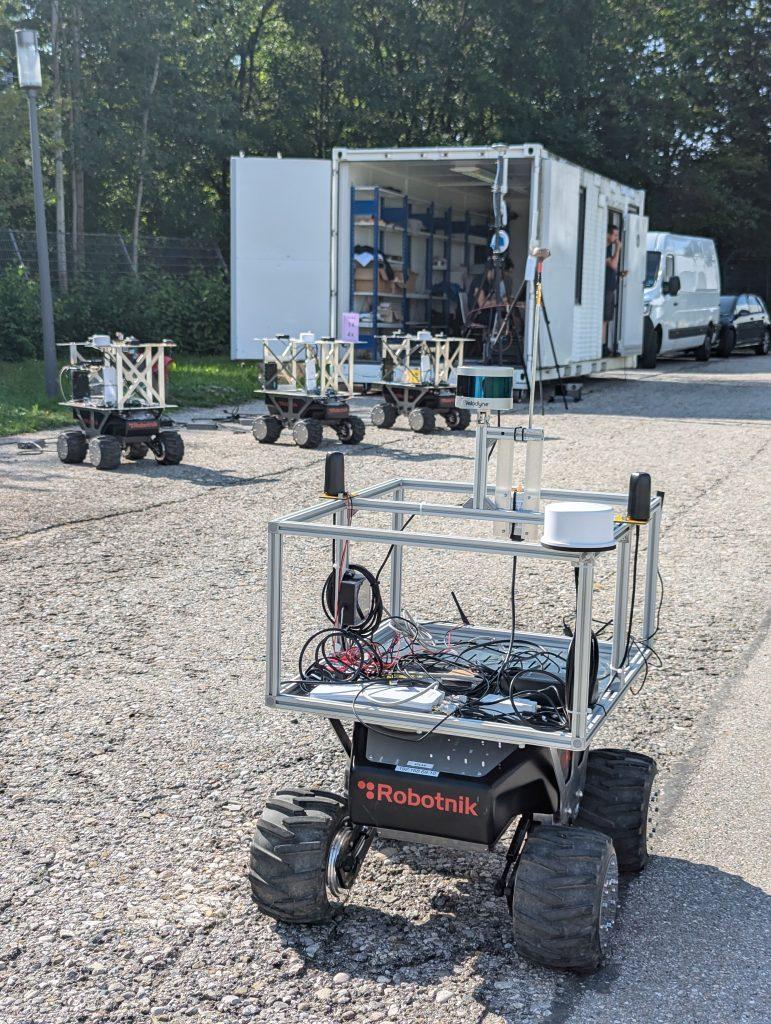
Several Summit-XL rovers at testing site

During the field test, we successfully integrated and validated several key components critical to our VaMEx3 RGE mission:

  • Sensor and hardware integration: Several sensors such as LIDAR, IMU and GNSS for ground truth generation, and radio ranging devices were integrated on the rovers. Additionally, hardware devices for WIFI-like communication were integrated and used successfullly.
  • Ground truth generation: The CNI implemented a robust method for ground truth generation by combining GNSS (Global Navigation Satellite System) and IMU (Inertial Measurement Unit) data. This fusion allowed for precise localization and accurate environmental mapping, crucial for validating our algorithms. Real-time kinematic (RTK) corrections are used for ground truth generation.
  • Radio ranging: The radio ranging functionality of DLR-KN was thoroughly tested and yielded promising results. The integration was seamless between the Cognitive Neuroinformatics (CNI) rovers and the DLR-KN rovers, demonstrating effective communication and distance measurements in various field conditions. It was the first time the radio ranging was tested in ROS2.

One of the highlights of our field test was the live test of multi-robot SLAM (Simultaneous Localization and Mapping). In a dual-robot scenario, we tested the real-time capabilities of our SLAM algorithms. The results were encouraging, showing the potential for cooperative exploration and mapping in unknown environments using multiple robots. The data collected during these tests will be instrumental in refining our algorithms further.

Preliminary Dataset Collection for Future Development

We successfully recorded a preliminary dataset during the test, which will be invaluable for ongoing development and future testing phases. This dataset includes data from all integrated sensors and systems, providing a rich source of information to enhance the robustness and reliability of our ground exploration technology.

Challenges Encountered: ROS2 Communication

While we achieved many of our objectives, we also encountered a significant challenge: ROS2 communication issues. With numerous active devices attempting to exchange data, we faced problems related to bandwidth and data synchronization. These issues highlighted areas where further optimization is needed to ensure smooth communication in more complex scenarios.

Moving Forward

Despite the communication challenges, our field test provided critical insights and validation of the hardware and algorithms that form the backbone of the VaMEx3 RGE project. The lessons learned will guide us in refining our systems for even more robust and reliable ground exploration in the future.

We look forward to the next phase of testing and development, building on these successes and continuing our collaboration in VaMEx3 to advance the state of autonomous ground exploration.

Stay tuned for more updates as we continue to explore new frontiers in multi-robot systems and autonomous exploration!

VaMEx at IPPW 2024

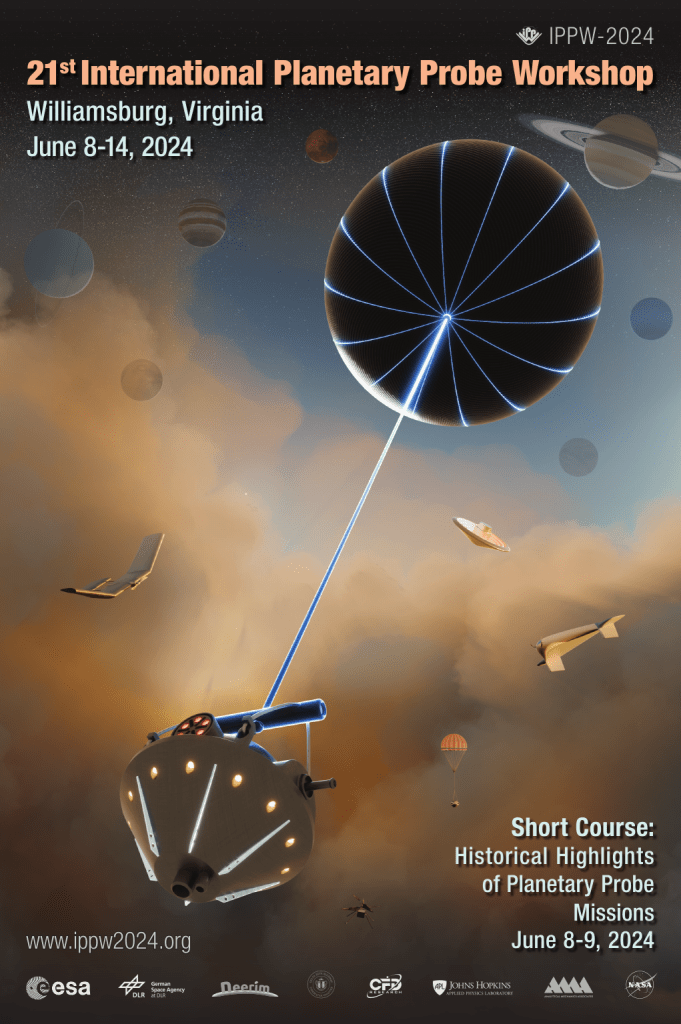
VaMEx was represented at the 21st International Planetary Probe Workshop (IPPW) in Williamsburg, USA, with our poster, “Will it work? Flexible Design and Initial Evaluation of a COTS-Mars UAV Navigation System”. The poster detailed our iterative Fault Tree Analysis-based design approach for a Mars UAV navigation system and presented initial performance results of the navigation filter. The early-stage application of the Fault Tree Analysis approach garnered significant interest during the poster session.

Additionally, a second poster related to VaMEx was contributed by future VaMEx project partner Clemens Riegler, titled “Downrange Capability Simulation of Autorotation vs. Propulsion”. This poster compared the flight ranges of classical propulsion, and autorotation landing systems. Clemens Riegler’s work earned him the “1st Place: Outstanding Student Poster Presentation” Award.

Max Hofacker and Clemens Riegler further represented VaMEx in their roles as session conveners for the Mars and Innovative Concepts for Exploration sessions, respectively. The IPPW provided a lot of opportunities for networking and exchange with international partners, including NASA, ESA, JAXA, JPL, and APL, facilitating discussions on current planetary exploration approaches and emerging trends.

The next IPPW will be held in Stuttgart, Germany, from June 23rd to June 27th, 2025.

Physically based Rendering of Planet Atmosphere

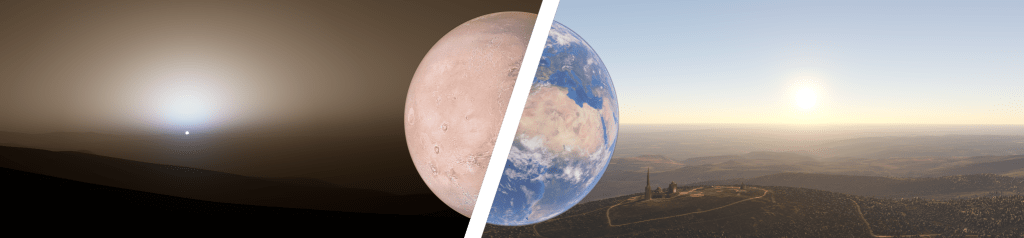
Our paper on Physically Based Real-Time Rendering of Atmospheres using Mie Theory has been presented at the 2024 Eurographics Conference and published in the 43th issue of the Computer Graphics Forum journal. In this paper, we present a novel approach for simulating light scattering in an atmosphere which is not only suitable for Earth’s atmosphere but can also be applied to the Martian atmosphere. To the best of our knowledge, this is the first time that a physically based rendering of the Martian atmosphere has been presented in real-time.

For VaMEx, we implemented this new approach into the Mission-Control Tool which will significantly enhance the realism of the visualizations. This allows scientists to better plan their missions and to better understand the data they receive from the swarm.

Successful integration of radio navigation & RTK setup

In late February, the DLR-Kommunikation und Navigation and Cognitive Neuroinformatics group (CNI) performed integration tests concerning the radio navigation and RTK setup in preparation of the VaMEx3 field tests. We conducted tests at CNI in Bremen, using two radio navigation modules comprising a USRP, a Nuc Computer, and a radio antenna. These modules transfer ranging measurements between each others and will eventually be integrated onto the Robotnik Summit XL rovers. During the upcoming field tests additional seven payload boxes will be deployed, each equipped with the radio navigation module. Through exchange of ranging information a successful navigation will be performed as well as positioning of the rovers will be robustified.

Successful test of radio communication and ranging.

Moreover, the multi-robot graph simulation in Gazebo Fortress was extended to assess the radio navigation outside of field tests. We designed a preliminary model of the payload boxes, which is able to publish its pose in Gazebo. A ROS2 node receiving the position information via the Gazebo ROS bridge, computes ranges between the payload boxes, and publishes them. These ranging measurements can enhance SLAM and positioning robustness for the multi-robot graph SLAM or other algorithms. We plan to implement the interfaces for the multi-robot operations in the near future.

Rovers and payload boxes in Gazebo simulation performing ranging between each other.

Lastly, we tested the GNSS Real-Time Kinematic (RTK) setup of the DLR-KN. We used the RTK corrections with the ZED-F9P and a Moasic H5 receiver. The receivers correctly utilized the corrections, resulting in a reported accuracy of approximately 1cm.

Testing setup for RTK correction data with a dual band GNSS antenna setup.